
By Attorney Fernando J. Lopez, Texas Personal Injury Lawyer | Updated June 12, 2026 Fernando J. Lopez. Attorney Bio
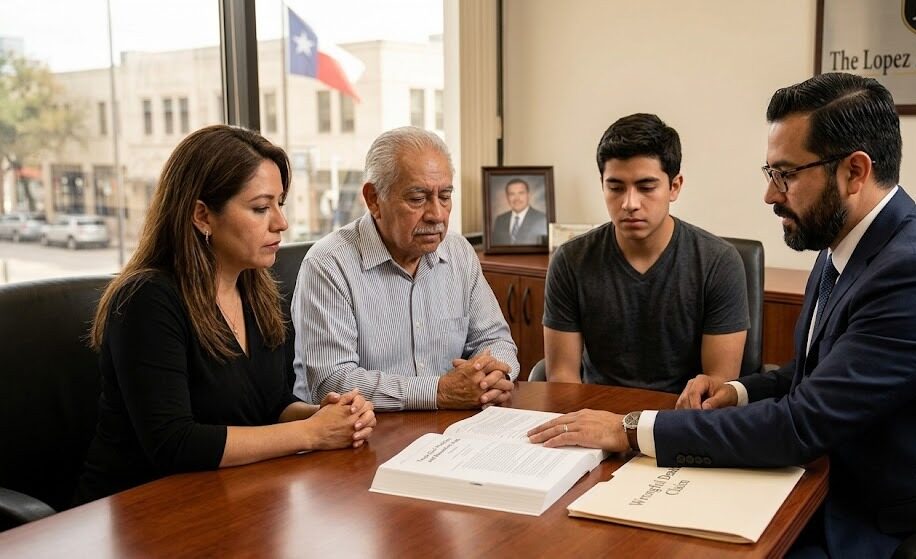
Losing someone because of another person’s negligence is devastating. You need answers fast. In Texas, only specific family members can file a wrongful death lawsuit, and the law gives you just two years to act. Under the Texas Civil Practice and Remedies Code, eligible wrongful death beneficiaries include the surviving spouse, children, and parents of the deceased. The Lopez Law Group has helped Texas families pursue justice for 18 years. This post walks you through who qualifies, what the process looks like, and what mistakes to avoid.
Quick Answer: In Texas, who can file a wrongful death lawsuit is defined by the Texas Civil Practice and Remedies Code Chapter 71. Eligible parties are the surviving spouse, children (including adult children), and parents of the deceased. Siblings and other relatives cannot file. If no family member files within three months, the executor of the estate may file on their behalf. The statute of limitations is two years from the date of death.
Table of Contents
Who Has Legal Standing to File a Wrongful Death Lawsuit in Texas
Definition: Wrongful Death Standing “Standing” in a wrongful death lawsuit means the legal right to bring a claim in court. Texas law limits this right to specific family members. Without proper standing, a court will dismiss your case regardless of how strong the underlying facts are.
Texas law is specific about wrongful death lawsuit eligibility. Three categories of family members hold the right to file:
Surviving Spouse. A husband or wife, including a common-law spouse recognized under Texas law, may file a wrongful death claim. Divorce proceedings that were not finalized at the time of death may complicate this, which is why legal review matters early.
Children. Both minor and adult children of the deceased may file. Adopted children qualify. Stepchildren generally do not qualify unless they were legally adopted. Biological children who were not legally acknowledged may face additional hurdles.
Parents. A surviving parent or both parents of the deceased may file a wrongful death suit in Texas. This applies whether the deceased was a minor or an adult child.
Siblings, grandparents, cousins, and other relatives do not have wrongful death standing under Texas law. If you are not in one of these three categories, you may still have options through a survival action or as a beneficiary of the estate, a wrongful death attorney in Texas can review your specific situation.
What the Texas Wrongful Death Statute Actually Says
The Texas wrongful death statute lives in Chapter 71 of the Texas Civil Practice and Remedies Code. Two sections matter most for families trying to understand their rights.
Section 71.002 establishes the cause of action. It states that a wrongful death claim exists when a person’s death is caused by the wrongful act, neglect, carelessness, unskillfulness, or default of another person or entity. The death must be one that would have supported a personal injury lawsuit if the person had survived.
Section 71.004 defines who may bring the claim. The surviving spouse, children, and parents are each individually authorized to file. They may file jointly or separately. If none of them files within three months of the death, the executor or administrator of the deceased person’s estate may file on their behalf, unless the surviving family members instruct the executor not to.
This three-month rule trips up many families. Some assume the estate automatically handles everything. It does not unless the family fails to act. According to the Texas Legislature’s official publication of the Civil Practice and Remedies Code, the family members hold the primary right and the estate steps in only as a backup.
The wrongful death statute Texas CPRC framework also interacts with the survival statute under Section 71.021, which allows the estate to recover damages the deceased person suffered before death, separate from what the family members recover.
How to File a Wrongful Death Claim in Texas: Step by Step
- Confirm you have standing. Verify you are the surviving spouse, child, or parent of the deceased. Gather documentation: marriage certificate, birth certificate, adoption records, or proof of common-law marriage as applicable.
- Preserve evidence immediately. Accident scenes change. Surveillance footage gets deleted. Medical records get archived. The sooner your attorney begins gathering evidence, the stronger your wrongful death lawsuit in Texas will be.
- Request the death certificate. You will need this for nearly every step of the legal process, including dealing with insurance companies and filing in court.
- Identify all liable parties. Wrongful death claims in Texas may target one defendant or many. A car accident may involve a driver, a trucking company, and a manufacturer. A medical negligence death may involve a physician, a hospital, and a pharmaceutical company.
- Send a demand letter. Your wrongful death attorney will draft a formal demand letter to the at-fault party and their insurance carrier. This letter outlines the facts, the legal theory, and the compensation sought.
- Negotiate or file suit. Many Texas wrongful death claims settle before trial. If the insurance adjuster refuses a fair offer, your attorney files a lawsuit in the appropriate Texas district court.
- Meet the statute of limitations. You have two years from the date of death under the Texas Civil Practice and Remedies Code. Missing this deadline ends your right to recover anything.
Who Gets the Money in a Texas Wrongful Death Settlement
This question comes up in nearly every family wrongful death claim in Texas, especially when multiple eligible parties exist.
| Beneficiary Type | What They May Recover | Notes |
| Surviving Spouse | Lost financial support, loss of companionship, mental anguish, funeral expenses | May also recover for loss of household services |
| Children | Loss of parental guidance, emotional support, financial contributions | Adult children may recover if they can show financial or emotional dependency |
| Parents | Mental anguish, loss of companionship, lost financial support if dependent on child | Both parents may recover independently |
| Estate (Survival Action) | Pain and suffering before death, medical bills before death, lost wages before death | Separate from wrongful death claim: goes to estate beneficiaries |
When multiple wrongful death beneficiaries in Texas file together, the court or a settlement agreement will allocate damages among them. There is no fixed formula. A jury considers each person’s relationship with the deceased and the actual losses they suffered.
Damages in a wrongful death settlement, who gets money, depend on the facts of each case. Past results do not guarantee future outcomes.
Texas Wrongful Death Statistics {#statistics}
| Statistic | Year | Source | Why It Matters |
| 4,283 people died in motor vehicle crashes in Texas | 2023 | Texas Department of Transportation (TxDOT) | Car and truck crashes are among the leading causes of wrongful death claims in Texas |
| Texas recorded the highest number of workplace fatalities in the U.S. 614 deaths | 2022 | U.S. Bureau of Labor Statistics | Workplace deaths generate wrongful death and oilfield fatality claims statewide |
| Unintentional injury is the 4th leading cause of death in Texas | 2022 | Texas Department of State Health Services | Most wrongful death claims stem from preventable accidents |
| Medical errors contribute to an estimated 250,000+ deaths annually in the U.S. | 2022 | Johns Hopkins University Study | Medical negligence wrongful death cases are among the most complex in Texas courts |
Common Mistakes That Hurt Wrongful Death Claims
- Waiting too long to contact an attorney. Evidence disappears quickly. Waiting months to call a wrongful death attorney Texas families trust means lost footage, missing witnesses, and weakened claims.
- Assuming workers’ compensation covers everything. If your family member died at work, workers’ comp may apply, but a separate wrongful death claim against a third party may also be available and far more valuable.
- Accepting an early insurance settlement. Insurance adjusters often approach grieving families with fast, low offers. Signing a release ends your right to pursue full wrongful death lawsuit eligibility claims.
- Not understanding who qualifies to file. Siblings who file without standing waste time and money. Confirm eligibility before filing anything.
- Missing the two-year statute of limitations. This is a hard deadline under Texas law. No exceptions exist for most wrongful death claims. Miss it and your case is gone.
- Failing to coordinate between family members. When a spouse and adult children file separately without coordination, it can create confusion over damages and weaken both claims.
- Not filing a survival action alongside the wrongful death claim. Many families leave money on the table by ignoring the separate survival action that covers the deceased person’s own pre-death damages.
Attorney Lopez’s Perspective
“In our experience handling wrongful death cases across Texas, the families who call us early consistently recover more than those who wait. The other side starts building their defense the same day the accident happens. Our team moves immediately to preserve evidence, identify every liable party, and make sure no family member’s right to file is overlooked or lost to a missed deadline.”
Attorney Fernando J. Lopez, The Lopez Law Group
When to Call a Wrongful Death Attorney
Call The Lopez Law Group at (956) 968-7800 right away if any of these apply:
- A family member died due to someone else’s negligence in Texas.
- You are unsure whether you qualify as a wrongful death beneficiary under Texas law.
- An insurance adjuster has already contacted you about a settlement.
- The death happened in a workplace accident, car crash, truck crash, or medical setting.
- Multiple family members want to file and need help coordinating claims.
- You are a parent whose adult or minor child was killed due to negligence.
- You are a surviving spouse and need to understand your rights under the Texas wrongful death statute.
- The deceased had no surviving spouse or children and you are a parent asking if you can file.
We serve clients in English and Spanish across Texas, from the Rio Grande Valley and Hidalgo County to Houston, Dallas, and beyond.
Texas Legal Notice {#legal-notice}
Your Rights Under Texas Wrongful Death Law
- Wrongful Death Statute: Texas Civil Practice and Remedies Code Chapter 71 governs all wrongful death claims in the state.
- Who May File: Surviving spouse, children, and parents only. Siblings and other relatives do not have standing.
- Statute of Limitations: Two years from the date of death. Missing this deadline permanently bars your claim in most cases.
- Estate Filing Backup: If no eligible family member files within three months of death, the executor may file on their behalf.
- Modified Comparative Negligence: 51% Bar Rule: If the deceased was found 51% or more at fault for their own death, surviving family members may not recover. If fault is 50% or less, damages are reduced proportionally.
- Geographic Jurisdiction: Claims arising in Cameron County, Hidalgo County, and across the Rio Grande Valley are filed in Texas state district courts. Federal claims may apply in certain cross-border or maritime cases.
Frequently Asked Questions
Who can file a wrongful death lawsuit in Texas?
Under the Texas Civil Practice and Remedies Code Chapter 71, the surviving spouse, children, and parents of the deceased person may file a wrongful death lawsuit in Texas. Siblings, grandparents, and other relatives do not qualify. If none of these family members files within three months, the estate executor may step in.
Can adult children file a wrongful death claim in Texas?
Yes. Adult children have full wrongful death lawsuit eligibility in Texas regardless of their age or financial independence from the deceased parent. They may file jointly with other eligible family members or file a separate claim for their individual losses.
Can a parent file a wrongful death lawsuit if their adult child dies?
Yes. Texas law allows parents to file a wrongful death claim for the death of an adult child, not just a minor. Parents may recover for mental anguish, loss of companionship, and financial losses if they were dependent on the child.
What is the deadline to file a wrongful death lawsuit in Texas?
The wrongful death lawsuit timeline in Texas requires filing within two years of the date of death under the Texas Civil Practice and Remedies Code statute of limitations. This deadline is strict. Courts rarely grant extensions, and missing it almost always ends your case permanently.
What damages can wrongful death beneficiaries recover in Texas?
Wrongful death beneficiaries in Texas may recover lost financial support, loss of companionship, mental anguish, funeral and burial expenses, and loss of household services. In cases involving gross negligence, punitive damages may also be available. Past results do not guarantee future outcomes.
Can a common-law spouse file a wrongful death claim in Texas?
Yes, if the common-law marriage was legally valid under Texas law at the time of death. Texas recognizes common-law marriage when both parties agreed to be married, lived together in Texas, and represented themselves as married. Documentation helps establish this status in court.
What if multiple family members want to file separately?
Multiple wrongful death claimants, for example, a surviving spouse and adult children, may file jointly or separately. Courts allocate damages among them based on each person’s individual relationship with the deceased and their actual losses. Coordinating through one wrongful death attorney Texas families trust usually produces better outcomes.
Who gets the money from a wrongful death settlement in Texas?
Money from a wrongful death settlement goes to the eligible family members who filed the claim. Each person recovers based on their individual losses. A separate survival action, filed on behalf of the estate, may also recover pre-death damages for the estate’s beneficiaries.
Can siblings file a wrongful death lawsuit in Texas?
No. Siblings do not have wrongful death standing under Texas law. Only the surviving spouse, children, and parents of the deceased may file. A sibling who believes they were financially dependent on the deceased should speak with a wrongful death attorney about whether any alternative legal options exist.
What is a survival action, and how is it different from a wrongful death claim?
A survival action, under Texas Civil Practice and Remedies Code Section 71.021, is filed on behalf of the deceased person’s estate to recover damages the deceased suffered before dying, such as medical bills, pain and suffering, and lost wages. A wrongful death claim is filed by family members for their own losses. Both can be filed in the same case.
How long does a Texas wrongful death lawsuit take?
Most Texas wrongful death cases resolve in one to three years. Simple cases with clear liability and cooperative insurance companies may settle faster. Complex cases involving multiple defendants, disputed facts, or trial may take longer. Your wrongful death attorney can give you a realistic timeline after reviewing the facts.
Do I need a wrongful death attorney, or can I handle this myself?
Wrongful death cases in Texas involve complex standing rules, multiple potential defendants, insurance companies with defense teams, and strict deadlines. Families who handle these claims without a wrongful death attorney Texas courts recognize typically recover far less than those with legal representation.
Get Help Now
Your family has already been through enough. If you lost someone due to another person’s negligence in Texas, the question of who can file a wrongful death lawsuit in Texas has a clear answer, and our team can tell you exactly where you stand in minutes.
Our Texas wrongful death lawyers handle every aspect of your claim, from preserving evidence on day one to standing beside you at trial if necessary. We work on contingency, no upfront fees, no hourly charges, no payment unless we recover for you.
You pay no attorney’s fee and no case expenses unless we recover for you.
Call us at (956) 968-7800 for a free consultation. We serve clients in English and Spanish throughout Texas. Follow us on Facebook, Instagram, and X for the latest updates!
Get Your Free Case Review Today
About the Author
Fernando J. Lopez is the founding attorney of The Lopez Law Group, a Texas personal injury firm with 18 years of experience representing injured clients and grieving families across the state. Attorney Lopez has a strong track record of results for injured Texans in wrongful death, oilfield accident, car accident, and personal injury cases. He serves clients in English and Spanish from offices in Weslaco and Houston.
Related Articles
- Texas Wrongful Death Lawyer: What Your Family Needs to Know
- How Long Does a Personal Injury Settlement Take in Texas?
- Do I Need a Personal Injury Lawyer in Texas?

