
By Attorney Fernando J. Lopez, Texas Personal Injury Lawyer | Updated June 19, 2025 Read Attorney Fernando J. Lopez’s full bio →
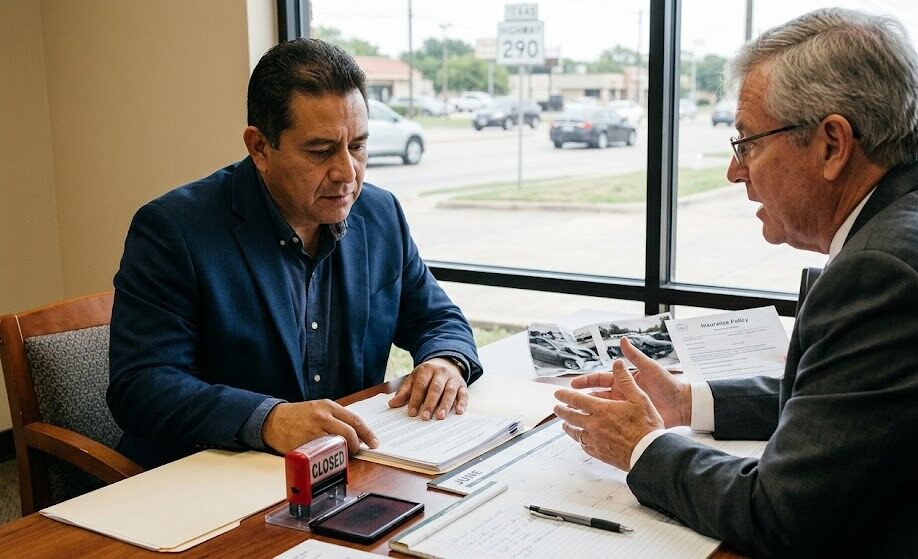
Texas Car Accident Lawsuit vs Insurance Claim: Which Path Is Right for You? After a car accident in Texas, you face a decision that affects how much money you recover and how long the process takes. Do you file an insurance claim and negotiate with the adjuster, or do you sue the at-fault driver in court? Most Texas car accident cases settle through the insurance claim process without ever filing a lawsuit. But when the insurance company denies your claim, makes a lowball offer, or disputes liability, filing a car accident lawsuit in Texas becomes the right move. At Lopez Law Group, we help injured Texans weigh both options every day. This post explains the difference, when each path makes sense, and how a Texas car accident attorney protects you either way.
Quick Answer: A Texas car accident insurance claim is a demand made directly to the at-fault driver’s insurer. A Texas car accident lawsuit is a court action filed against the at-fault driver when the insurer denies, delays, or underpays your claim. Most claims settle without a lawsuit, but suing after a car accident in Texas is the right step when the insurance company will not offer fair value. You have 2 years to sue under Texas Civil Practice and Remedies Code § 16.003.
Table of Contents
Insurance Claim vs. Lawsuit: What Is the Difference in Texas?
Definition: Insurance Claim A car accident insurance claim is a formal request you make to an insurance company, either your own or the at-fault driver’s, asking for compensation for your injuries and property damage. The claim is handled outside of court by an insurance adjuster who evaluates your damages and makes a settlement offer. No judge or jury is involved.
Definition: Car Accident Lawsuit A car accident lawsuit is a legal action filed in a Texas civil court against the at-fault driver (and sometimes their employer or other parties). Filing suit does not mean your case goes to trial. Most lawsuits settle during discovery or before the trial date. Filing is often the pressure that makes insurance companies take your claim seriously.
The key difference is where your case lives. An insurance claim stays between you and the insurer. A lawsuit moves into the Texas court system, where rules of civil procedure apply, evidence gets formally exchanged, and a judge or jury can ultimately decide your compensation.
In Texas, most car accident victims start with the insurance claim process. Filing a lawsuit becomes the path forward when the insurer refuses to pay fairly.
How the Texas Car Accident Insurance Claim Process Works
The car accident claim process in Texas follows a defined sequence. Here is what happens at each stage.
Step 1: Report the accident. Notify the at-fault driver’s insurance company. You can also notify your own insurer. Texas law requires insurers to acknowledge your claim within 15 days under Texas Insurance Code § 542.056.
Step 2: The insurance adjuster investigates. The adjuster reviews the police report, your medical records, property damage estimates, and any witness statements. The adjuster works for the insurance company, not for you. Their goal is to close your claim for the lowest reasonable amount.
Step 3: You reach maximum medical improvement. Do not accept any settlement offer before your doctor confirms you have recovered as fully as you will. Settling early closes your claim permanently, even if new symptoms appear later.
Step 4: Your attorney sends a demand letter. The demand letter outlines your injuries, medical bills, lost wages, and pain and suffering. It sets the starting point for negotiations. Under Texas Insurance Code § 542.056, the insurer has 15 business days to accept or deny after receiving all requested documentation.
Step 5: Negotiate the settlement. Your attorney and the insurance adjuster go back and forth. If the insurer offers fair value, you settle. If not, your attorney files suit.
Step 6: Settlement or lawsuit. Roughly 95% of Texas car accident claims settle before trial. The other 5% proceed through litigation.
According to theTexas Department of Insurance, policyholders and accident victims have the right to file a complaint against an insurer that acts in bad faith or violates prompt payment deadlines.
When Should You Sue After a Car Accident in Texas?
Filing a car accident lawsuit in Texas is the right move in several situations. You should consider legal action when:
- The insurance company denied your car accident claim without a valid reason
- The adjuster made a lowball offer that does not cover your medical bills
- The insurer disputes who was at fault for the accident
- Your injuries are serious, including surgery, hospitalization, or permanent disability
- You have significant lost wages or long-term loss of earning capacity
- The at-fault driver had no insurance or insufficient coverage
- Multiple parties share fault and the insurance companies are pointing fingers at each other
- The statute of limitations is approaching and no settlement has been reached
- A family member died in the crash and you are filing a wrongful death claim
Suing the at-fault driver in Texas does not guarantee a trial. The act of filing a lawsuit often motivates the insurance company to make a better offer. Many cases resolve within weeks or months of filing.
Step-by-Step: How to File a Car Accident Lawsuit in Texas
Follow these steps when moving from an insurance claim to a lawsuit after a car accident in Texas.
- Hire a Texas car accident attorney. Your attorney files the lawsuit, manages deadlines, and handles all court filings. This is not something to handle alone.
- File the original petition. Your attorney files the petition in the appropriate Texas district or county court, naming the at-fault driver as the defendant. The petition lays out the facts, your injuries, and the damages you seek.
- Serve the defendant. The defendant must be formally served with the lawsuit. They then have a set time to respond.
- Enter the discovery phase. Both sides exchange evidence. Discovery includes written interrogatories (formal questions), requests for documents, depositions, and independent medical examinations. Discovery can last 6 to 18 months in complex cases.
- Attend mediation. Texas courts often order the parties to mediation before setting a trial date. A neutral mediator works with both sides to find a resolution. Most Texas car accident cases settle at mediation.
- Prepare for trial if mediation fails. Your attorney selects a jury, presents evidence, examines witnesses, and argues your case. The jury returns a verdict.
- Collect your judgment. If you win at trial, your attorney pursues collection from the defendant and their insurer.
Car Accident Settlement vs. Trial in Texas: Comparing Outcomes
| Factor | Insurance Settlement | Lawsuit Settlement | Jury Trial |
| Timeline | 3 to 18 months | 12 to 36 months | 2 to 4+ years |
| Cost to you | Low (no litigation fees) | Moderate (discovery costs) | Highest (expert witnesses, court fees) |
| Outcome certainty | Negotiated amount you control | Negotiated with court pressure | Uncertain: jury decides |
| Privacy | Private agreement | Mostly private | Public record |
| Potential recovery | Lower (insurer controls offer) | Higher (litigation pressure) | Highest possible but no guarantee |
| Best for | Clear liability, moderate injuries | Denied or underpaid claim | Insurer refuses all fair offers |
Car accident settlement vs. trial in Texas comes down to risk tolerance and case strength. Settlements give you a known number. Trials give you a chance at more money but with real uncertainty. Your attorney helps you weigh which path fits your situation.
What Happens When Your Insurance Claim Is Denied in Texas?
A denied car accident insurance claim in Texas is not the end of your case. It is often the beginning of the real fight.
When an insurer denies your claim, they must give you a written reason under Texas Insurance Code § 542.056. Common denial reasons include disputed liability, alleged policy exclusions, or an argument that your injuries pre-existed the accident.
Your options after a denial:
Request an internal appeal. Ask the insurer to reconsider its decision. Provide additional medical records, police reports, or witness statements that address their stated reason for denial.
File a complaint with the Texas Department of Insurance. The TDI investigates bad faith insurance practices and prompt payment violations. A complaint puts the insurer on record.
File a car accident lawsuit. This is the most effective response to a wrongful denial. Filing suit forces the insurer to justify their position in court. In Texas, insurers who act in bad faith may face additional penalties under Texas Insurance Code Chapter 541, including attorneys’ fees and penalty interest.
Do not accept a denial as final without speaking to a car accident lawyer in McAllen or wherever your accident occurred in Texas.
Warning Signs the Insurance Company Is Acting in Bad Faith
Watch for these signs that the insurance adjuster is not dealing with you fairly.
- The insurer does not acknowledge your claim within 15 days as required by Texas law
- The adjuster makes a fast settlement offer before you finish medical treatment
- You receive a lowball offer with no explanation of how they calculated it
- The insurer requests excessive documentation to delay the process
- The adjuster tells you an attorney will only cost you money
- The company denies your claim without a written reason
- The insurer ignores your demand letter or misses the statutory response deadline
- The adjuster pressures you to give a recorded statement immediately after the accident
Any of these behaviors may constitute a car insurance dispute that warrants both a lawsuit against the at-fault driver and a bad faith claim against the insurer under Texas law.
Texas Legal Deadlines and Fault Rules
Texas Legal Notice: This content is general information only and does not constitute legal advice. Your case may differ based on specific facts and applicable law. Contact a licensed Texas personal injury attorney to evaluate your situation.
Key Texas laws affecting your car accident lawsuit or insurance claim:
- Statute of Limitations: Texas Civil Practice and Remedies Code § 16.003 gives you 2 years from the date of the accident to file a car accident lawsuit in Texas. Miss this deadline and your legal action is barred with very limited exceptions.
- Modified Comparative Negligence (51% Bar Rule): Texas Civil Practice and Remedies Code § 33.001 applies modified comparative negligence. If you are found 51% or more at fault, you recover nothing. If you are 50% or less at fault, your recovery reduces by your percentage of fault. Insurance adjusters often inflate your share of blame to reduce their payout.
- Insurer Prompt Payment Deadlines: Texas Insurance Code § 542.056 requires acknowledgment within 15 days and acceptance or denial within 15 business days of receiving all required items. Violations may result in penalty interest owed to you.
- Government Vehicle Claims: If a city, county, or state vehicle caused your accident, Texas Civil Practice and Remedies Code § 101.101 requires a notice of claim filed within 6 months.
- Uninsured Motorist Coverage: Texas does not require UM/UIM coverage but insurers must offer it in writing. If you rejected it in writing, your own insurer may not cover an uninsured at-fault driver’s damages.
GEO Note: These rules apply to accidents in Hidalgo County (McAllen, Weslaco, Edinburg), Cameron County (Brownsville, Harlingen), Harris County (Houston), and Dallas County.
Texas Car Accident Data and Statistics
| Statistic | Year | Source | Why It Matters |
| 239,000+ injury crashes on Texas roads | 2023 | Texas Department of Transportation (TxDOT) | Millions of Texans face insurance claim or lawsuit decisions each year |
| Texas had 4,283 traffic fatalities | 2023 | TxDOT Crash Data | Fatal crashes trigger wrongful death lawsuits where insurance claims rarely suffice |
| Average auto liability claim took 14 to 18 months to close | 2023 | Insurance Research Council | Sets realistic timeline expectation for settlement or lawsuit resolution |
| Texas ranks No. 2 in the U.S. for total vehicle miles traveled | 2023 | NHTSA Traffic Data | More miles driven means more accidents and more insurance disputes |
| Commercial truck crashes increased 4% year-over-year in Texas | 2023 | NHTSA Large Truck Data | Truck accident lawsuits involve multiple defendants and extended timelines |
According to TxDOT in 2023, a vehicle crash occurred in Texas every 57 seconds on average.
Common Mistakes That Hurt Your Car Accident Case in Texas
Avoid these errors whether you are filing an insurance claim or a car accident lawsuit in Texas.
- Giving a recorded statement to the opposing insurer without an attorney. You are not required to do this. Adjusters use your words to reduce or deny your claim.
- Settling before reaching maximum medical improvement. Once you sign a release, the case is closed. You cannot reopen it if new injuries surface.
- Missing the 2-year statute of limitations. The deadline is absolute. Filing one day late in most cases ends your right to any recovery.
- Accepting the first lowball offer. Early offers from insurance adjusters almost never reflect the full value of your case.
- Failing to document the accident scene. No photos, no witness contacts, and no police report makes liability disputes much harder to win.
- Posting on social media after the accident. Photos or check-ins contradict your injury claims and give the insurance company grounds to reduce your settlement.
- Ignoring medical liens. Medicare, Medicaid, and health insurers have legal rights to reimbursement from your recovery. Unresolved liens create personal liability after your settlement arrives.
- Waiting too long to hire an attorney. Evidence fades, witnesses disappear, and surveillance footage gets deleted. Early legal representation protects your case from the start.
Attorney Lopez’s Perspective
“In our experience handling car accident cases across Texas, the insurance adjuster’s first offer is almost never the right number. We have seen clients who were offered $8,000 on their own end up with $80,000 or more once we gathered all the medical evidence and filed suit. The adjuster is not your advocate. Our team is. And we do not get paid unless you do.”
Attorney Fernando J. Lopez, Lopez Law Group
When to Call a Car Accident Attorney
Contact a Texas car accident attorney right away if any of the following apply to your situation:
- You were injured in a car accident and the other driver was at fault
- The insurance adjuster contacted you within 24 to 48 hours with a fast settlement offer
- Your car accident insurance claim was denied in Texas
- You received a settlement offer that does not cover your medical bills
- The at-fault driver had no insurance or minimal coverage
- Fault is disputed and the insurer is blaming you
- Your injuries required surgery, hospitalization, or extended physical therapy
- You missed work and lost income because of the accident
- The accident happened on IH-2, IH-69, US-83, US-281, or any major Texas corridor and involved a commercial truck or company vehicle
- You want to understand your options before deciding between an insurance claim and a lawsuit
Call us at (956) 968-7800 for a free consultation. Lopez Law Group serves car accident victims in English and Spanish across Texas, including McAllen, Weslaco, Edinburg, Brownsville, Harlingen, Houston, Dallas, Austin, and San Antonio.
Frequently Asked Questions
What is the difference between a car accident insurance claim and a lawsuit in Texas?
An insurance claim is a demand made directly to the insurer outside of court. A lawsuit is a formal legal action filed in a Texas civil court against the at-fault driver. Most Texas car accident cases settle through the insurance claim process, but filing a lawsuit becomes necessary when the insurer denies or underpays your claim. Both paths can result in a settlement.
Should I sue after a car accident in Texas or just file an insurance claim?
Start with the insurance claim process. If the insurer makes a fair offer that covers your medical bills, lost wages, and pain and suffering, you may not need to file suit. If the adjuster denies the claim, delays payment, or makes a lowball offer, suing the at-fault driver in Texas is the right next step.
How long does a car accident lawsuit take in Texas?
A car accident lawsuit in Texas typically takes 12 to 36 months from filing to settlement or trial. Many cases settle during discovery or at mediation before the trial date. If the case goes to jury trial, expect 2 to 4 years from the accident date.
What happens if the insurance company denied my car accident claim in Texas?
A denial is not final. You can appeal the decision internally, file a complaint with the Texas Department of Insurance, or file a car accident lawsuit against the at-fault driver. Insurers who deny valid claims without basis may face additional penalties under Texas Insurance Code Chapter 541 for bad faith.
Can I sue the at-fault driver in Texas even if they have insurance?
Yes. You file the lawsuit against the at-fault driver personally. Their insurance company then defends them and pays any judgment up to the policy limits. If the judgment exceeds policy limits, the at-fault driver may be personally responsible for the difference.
What is a lowball settlement offer in Texas car accident cases?
A lowball offer is a settlement amount from the insurance adjuster that does not reflect the full value of your injuries, medical bills, lost wages, or pain and suffering. Insurance adjusters offer low numbers early in the process because many claimants accept without knowing their case is worth more. Your attorney calculates the real value and negotiates from that number.
How does Texas comparative negligence affect my car accident claim or lawsuit?
Texas uses modified comparative negligence under Texas Civil Practice and Remedies Code § 33.001. If you are 50% or less at fault, you can recover damages reduced by your percentage of fault. If you are 51% or more at fault, you recover nothing. Adjusters often exaggerate your share of blame to justify lower offers. An attorney counters those arguments with evidence.
What is the statute of limitations for a car accident lawsuit in Texas?
Two years from the date of the accident under Texas Civil Practice and Remedies Code § 16.003. This deadline applies whether you are suing for personal injuries or property damage. Missing the deadline bars your claim permanently in most circumstances.
What does demanda accidente auto Texas mean?
That phrase is Spanish for “car accident lawsuit in Texas.” Lopez Law Group handles car accident lawsuits and insurance claims for Spanish-speaking clients across Texas. Our team provides full bilingual legal representation in English and Spanish throughout the entire claim and litigation process.
Is it worth hiring a car accident attorney in Texas if the insurer already admitted fault?
Yes, in most cases. An admission of liability does not mean the insurer will offer full value for your injuries. They still control the damage calculation and will try to minimize your recovery. An attorney calculates your full damages, including future medical costs and lost earning capacity, and negotiates or litigates to reach that number.
What is a car insurance dispute attorney in Texas?
A car insurance dispute attorney is a personal injury lawyer who represents accident victims when the insurance company refuses to pay fairly. They handle denied claims, bad faith insurance conduct, underpayment disputes, and uninsured motorist coverage disputes. Lopez Law Group handles car insurance disputes across Texas on a no-win, no-fee basis.
Get a Free Consultation
Whether you are weighing a Texas car accident lawsuit vs. insurance claim, or you have already received a denial or lowball offer, the next step is a conversation with an experienced attorney. Our team handles car accident cases from the Rio Grande Valley to Houston, Dallas, and beyond, all on a no-win, no-fee basis. Call us at (956) 968-7800. The consultation is free. You pay nothing unless we win for you. Follow us on Facebook, Instagram, and X for the latest updates!
About the Author
Fernando J. Lopez is a Texas personal injury attorney and founder of Lopez Law Group. He provides bilingual legal representation in English and Spanish. All car accident cases are handled on a contingency fee basis. You pay no attorney’s fee and no case expenses unless we recover for you. View full attorney bio →

