
A construction site injury changes your life fast, and the insurance company will move even faster to deny your claim. If you got hurt on a job site in Texas, you need to know how to prove negligence in construction accidents Texas law recognizes, because a fall, a falling object, or faulty equipment rarely happens by accident alone. Someone usually failed to follow a safety rule, skipped an inspection, or ignored a hazard they knew about. At Lopez Law Group, we have helped injured workers and site visitors across Texas hold negligent contractors, subcontractors, and property owners accountable. This guide walks you through the legal elements you need, the evidence that wins cases, and the deadlines you cannot miss.
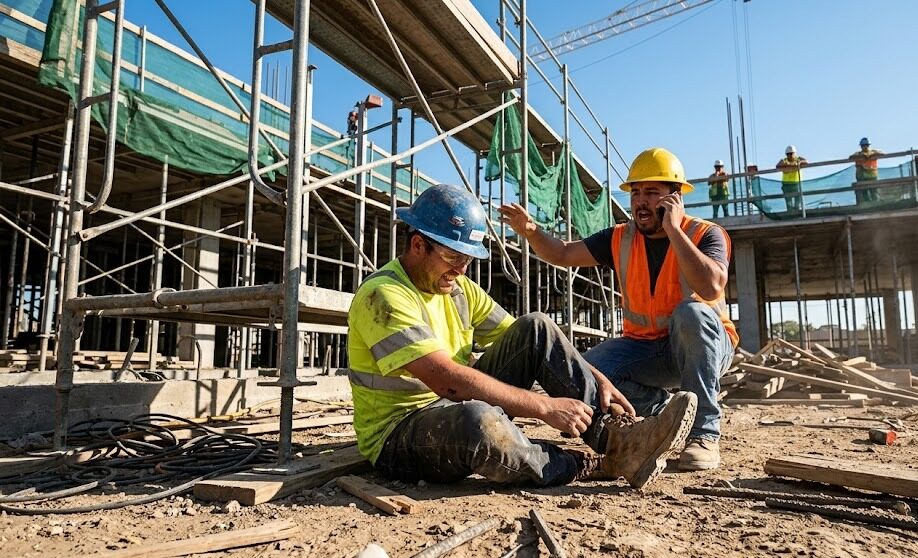
Quick Answer: To prove negligence in a Texas construction accident, you must show the at-fault party owed you a duty of care, breached that duty through an unsafe act or omission, and that breach directly caused your injury and damages. Strong cases rely on OSHA citations, site safety logs, witness statements, and expert testimony. Texas follows modified comparative negligence with a 51% bar, and most injury claims must be filed within two years under the Texas Civil Practice and Remedies Code.
Table of Contents
- Understanding Negligence Elements in Construction Cases
- Who Can Be Held Liable on a Texas Construction Site
- Duty of Care and Breach on Construction Sites
- How to Gather Evidence: A Step-by-Step Process
- OSHA Violations and Negligence Per Se
- Comparing Fault-Based Claims vs. Workers’ Compensation
- Causation: Connecting the Breach to Your Injury
- Texas Legal Notice
- Data and Statistics
- Common Mistakes to Avoid
- Attorney Lopez’s Perspective
- When to Call a Lawyer
- Frequently Asked Questions
Understanding Negligence Elements in Construction Cases
Texas law breaks negligence down into four parts, and you need all four to win. First, the defendant owed you a duty of care. A general contractor owes that duty to every worker on site, and a property owner owes it to visitors and subcontractors alike. Second, the defendant breached that duty through an unsafe act or a failure to act. Third, that breach caused your accident. Fourth, you suffered real damages, medical bills, lost wages, or permanent impairment.
Construction site liability Texas claims often involve more than one party. A subcontractor may have installed scaffolding wrong, while the general contractor failed to inspect it. Contractor negligence Texas cases frequently name several defendants because construction sites operate on layers of responsibility, and proving fault construction accident Texas claims means tracing that chain back to whoever created or ignored the hazard.
Who Can Be Held Liable on a Texas Construction Site
A negligent construction site Texas claim can involve any of the following parties, depending on what caused your injury:
- General contractors who fail to enforce safety protocols across the site
- Subcontractors who perform work below accepted safety standards
- Property owners who know about a hazard and do nothing
- Equipment manufacturers if a machine or tool is defective
- Architects and engineers whose design errors create unsafe conditions
- Site safety managers who skip required inspections
Identifying every liable party matters because Texas allows you to pursue compensation from each defendant based on their share of fault. Missing a defendant can mean missing out on the full value of your claim.
Duty of Care and Breach on Construction Sites
Definition: Duty of Care — A legal obligation requiring a person or company to act with the level of caution a reasonably careful party would use in the same situation. On a construction site, this includes following OSHA rules, maintaining equipment, training workers, and warning of known hazards.
Construction accident duty of care Texas standards apply differently depending on your role. Workers owe a duty of care to fellow crew members. Contractors owe a broader duty covering the whole site. Property owners owe a duty to keep the premises reasonably safe for anyone lawfully present, including delivery drivers and inspectors.
A breach happens when someone falls short of that standard. Examples include unguarded floor openings, unstable scaffolding, missing fall protection, poorly maintained cranes, and untrained workers operating heavy equipment. Construction accident breach duty Texas claims often hinge on whether a reasonable contractor in the same position would have caught and fixed the hazard before someone got hurt.
How to Gather Evidence: A Step-by-Step Process
Construction accident evidence Texas cases are won or lost on documentation. Follow these steps as soon as possible after the accident:
- Report the accident immediately to your supervisor or the site safety officer and request a written incident report.
- Photograph the scene from multiple angles before conditions change, including equipment, warning signs, and the exact hazard involved.
- Identify witnesses on site and get their names and phone numbers before they leave.
- Request the OSHA log and any prior safety citations issued to the general contractor or subcontractor.
- Preserve your safety gear and any equipment involved, since it may show a defect or lack of maintenance.
- Get medical treatment right away and keep every record, since gaps in treatment give insurers room to argue your injury was not serious.
- Avoid recorded statements to the contractor’s insurance adjuster until you have spoken with a construction injury proof attorney Texas workers trust.
- Consult an attorney early so evidence like site cameras and equipment logs gets preserved before it disappears.
OSHA Violations and Negligence Per Se
An OSHA violation negligence Texas claim can strengthen your case significantly. Under the legal doctrine of negligence per se, if a defendant violated a safety statute or regulation designed to protect people like you, and that violation caused your injury, a court may find them negligent as a matter of law without requiring you to separately prove the reasonable-person standard. According to OSHA’s General Duty Clause, employers must provide a workplace free from recognized hazards likely to cause death or serious physical harm, and citations issued after an accident often become central pieces of construction site safety violation attorney case files.
Common OSHA violations tied to construction accidents include missing fall protection above six feet, unguarded trench excavations, improperly secured scaffolding, and lack of required personal protective equipment. A citation does not guarantee a win, but it gives your attorney a documented safety failure to build the case around.
Comparing Fault-Based Claims vs. Workers’ Compensation
| Factor | Workers’ Compensation Claim | Third-Party Negligence Claim |
| Who you sue | No lawsuit, filed with insurer | Contractor, subcontractor, property owner, or manufacturer |
| Fault required | No, no-fault system | Yes, must prove negligence |
| Damages available | Medical bills, partial wage replacement | Medical bills, full lost wages, pain and suffering |
| Employer participation | Required if employer subscribes | Applies to non-employer parties |
| Texas note | Many Texas employers opt out of workers’ comp | Available even if employer opted out |
Texas is one of the few states where employers can opt out of workers’ compensation coverage entirely. When that happens, or when someone other than your direct employer caused your injury, a fault-based negligence claim is often your strongest path to full compensation.
Causation: Connecting the Breach to Your Injury
Construction accident causation Texas claims require you to draw a straight line from the breach to your specific injury. It is not enough to show a hazard existed, you must show that hazard is what actually hurt you. Insurance companies frequently argue that a pre-existing condition, a different cause, or your own actions led to the injury instead.
Medical records, accident reconstruction experts, and site engineers often testify to close this gap. In our experience, causation disputes are where many claims lose value if the evidence is not locked down early, which is why documenting the scene and your injuries right away matters so much.
Texas Legal Notice
Key Texas Statutes Governing Construction Accident Claims
- Texas Civil Practice and Remedies Code Chapter 33 (Proportionate Responsibility): Texas follows a modified comparative negligence rule with a 51% bar. If you are found 51% or more at fault for your own accident, you cannot recover damages. If you are 50% or less at fault, your compensation is reduced by your percentage of fault.
- Texas Civil Practice and Remedies Code Section 16.003 (Statute of Limitations): You generally have two years from the date of the accident to file a personal injury lawsuit in Texas.
- Texas Labor Code Chapter 406: Governs workers’ compensation participation and the rights of employees when an employer subscribes or opts out.
This is general information and not legal advice for your specific situation.
Data and Statistics
| Statistic | Year | Source | Why It Matters |
| Falls remain a leading cause of construction worker deaths nationally | 2024 | OSHA | Shows why fall protection violations are a major focus in negligence claims |
| Texas recorded among the highest totals of workplace fatalities of any state | 2023 | Texas Department of Insurance, Division of Workers’ Compensation | Highlights the scale of construction risk across Texas job sites |
| Struck-by, caught-in/between, and electrocution join falls as OSHA’s “Fatal Four” causes of construction deaths | 2024 | OSHA | Helps identify the hazard categories most relevant to your claim |
| Motor vehicle and equipment-related incidents remain a significant share of Texas workplace injuries | 2023 | Texas Department of Insurance | Relevant when construction sites involve heavy equipment near roadways like IH-2, IH-69, US-83, or US-281 |
Common Mistakes to Avoid
- Waiting to report the accident — delays give the contractor room to argue the injury did not happen on site.
- Skipping medical care — untreated injuries look minor on paper, even when they are not.
- Posting about the accident on social media — insurance adjusters use posts to argue you are exaggerating your injury.
- Giving a recorded statement without counsel — adjusters ask questions designed to get you to downplay fault or injury severity.
- Assuming workers’ compensation is your only option — many Texas employers opt out, and third parties may still be liable.
- Missing the statute of limitations — once two years pass, you generally lose the right to file at all.
- Not identifying every liable party — leaving out a subcontractor or manufacturer can shrink your total recovery.
- Accepting the first settlement offer — early offers rarely account for future medical needs or long-term lost earning capacity.
Attorney Lopez’s Perspective
“In our experience handling construction injury cases across Texas, the strongest claims are built in the first 48 hours. Photos fade from memory, witnesses move on, and equipment gets repaired or replaced fast. We push to preserve that evidence immediately so our clients are not left arguing against a contractor’s version of events months later.” — Attorney Fernando J. Lopez, The Lopez Law Group
When to Call a Lawyer
You do not need to wait until your case feels complicated to bring in help. Consider calling a lawyer if any of the following apply to your situation:
- You were injured by equipment, a fall, or a structural collapse on a job site
- The contractor or their insurer is disputing how the accident happened
- Your employer opted out of workers’ compensation
- You believe more than one party shares fault for your injury
- You are facing mounting medical bills and lost income
- OSHA has opened an investigation into the site
Lopez Law Group offers a free consultation and works on a no win, no fee basis. Call us at (956) 968-7800 to talk with our team about your construction accident claim. We serve clients in English and Spanish.
Frequently Asked Questions on how to prove negligence in construction accidents Texas
What counts as negligence in a Texas construction accident?
Negligence means a party owed you a duty of care, breached it through an unsafe act or omission, and that breach caused your injury. This can include skipped inspections, missing fall protection, or defective equipment. Texas courts look at whether a reasonable contractor would have prevented the hazard.
Can I sue if I already filed a workers’ compensation claim?
Yes, if a party other than your direct employer contributed to the accident, such as a subcontractor or equipment manufacturer, you may still bring a third-party negligence claim. Workers’ compensation and third-party claims are separate legal paths that can sometimes both apply.
How long do I have to file a construction accident lawsuit in Texas?
Texas Civil Practice and Remedies Code Section 16.003 generally gives you two years from the date of the accident to file a personal injury lawsuit. Missing this deadline usually bars you from recovering compensation, so early legal advice matters.
Does an OSHA citation automatically win my case?
No, but an OSHA citation is strong supporting evidence. It can support a negligence per se argument, meaning the violation itself may establish a breach of duty, though you still need to prove causation and damages.
What if I was partly at fault for my own accident?
Texas follows modified comparative negligence with a 51% bar. If you are 50% or less at fault, your compensation is reduced by your percentage of fault. If you are found 51% or more at fault, you cannot recover damages.
What damages can I recover in a construction accident claim?
You may recover medical expenses, lost wages, loss of future earning capacity, and pain and suffering, among other damages depending on your case. Under Texas law, you may recover these amounts if negligence and causation are proven, though outcomes vary by case.
Do I need an attorney if the contractor’s insurance already contacted me?
Speaking with an attorney before giving a recorded statement protects you from adjuster questions designed to shift blame or minimize your injury. Insurance companies represent their own interests, not yours.
What if the general contractor blames a subcontractor?
This is common on multi-party sites. Your attorney can investigate contracts, safety logs, and OSHA findings to identify every party who contributed to the hazard, so responsibility is not unfairly shifted away from a liable party.
Can undocumented workers file a construction accident claim in Texas?
Immigration status generally does not bar you from pursuing a personal injury claim for a workplace accident in Texas. Speaking with an attorney can help you understand your specific rights and options.
How much does it cost to hire a construction accident lawyer?
Lopez Law Group works on a no win, no fee basis, meaning you generally pay no upfront cost, and fees are typically collected only if you recover compensation. A free consultation lets you review your options at no cost.
Closing and Call to Action
Proving negligence in a Texas construction accident takes fast action, strong documentation, and a clear understanding of duty, breach, and causation. Contractors and their insurers will not volunteer the evidence that helps your claim, and the two-year filing deadline does not wait for you to feel ready. If you were hurt on a job site, our construction accident lawyer team can review what happened, identify every liable party, and fight for the compensation you may be owed. Call us at (956) 968-7800 for a free consultation. No win, no fee, and we serve clients in English and Spanish across Texas. follow us on Facebook, Instagram, and X for the latest updates!
Author Bio
Fernando J. Lopez is the founder of Lopez Law Group, a Texas-based personal injury firm representing accident victims, injured workers, and families across Weslaco, Houston, Austin, and communities throughout the Rio Grande Valley and beyond. Attorney Lopez and his team provide bilingual representation in English and Spanish and handle cases on a no win, no fee basis, offering free consultations to every client.

