
You just got out of a crash and everyone involved has a different story about what happened. Thats normal. Figuring out who is at fault in a car accident in Texas rarely comes down to just one persons word against another. It comes down to evidence. Police reports. Traffic laws. Sometimes even a few seconds of dash cam footage. At Lopez Law Group weve spent years untangling fault questions for clients across the state and the process is more structured than most people expect going in. Heres how fault actually gets figured out and what it means for your claim.
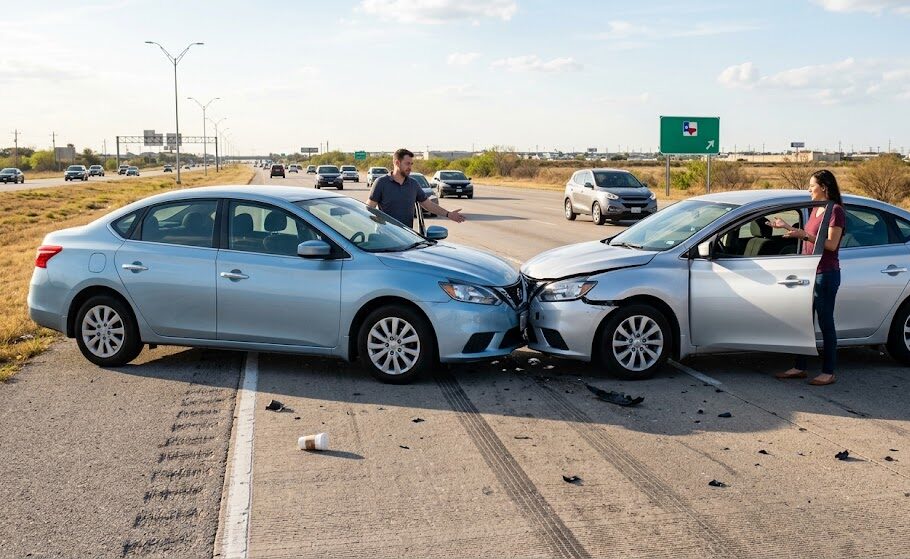
Quick Answer: Fault in a Texas car accident gets determined through evidence like the police report witness statements traffic laws and sometimes expert reconstruction. Texas car accident liability often comes down to a percentage split between drivers rather than one person taking all the blame. Lopez Law Group offers a free consultation and works on a no fee unless we win basis for accident victims across Texas. You pay no attorney’s fee and no case expenses unless we recover for you.
How Texas Actually Determines Fault
Fault isnt decided by who apologizes first at the scene or who seems more upset. Insurance adjusters and courts look at concrete things. Traffic law violations. Vehicle positioning. Skid marks. Witness accounts. A how to determine fault Texas accident case usually starts with the police report since officers document lane position citations issued and initial statements from both drivers.
From there insurance companies build their own view of what happened and that view doesnt always match the police report exactly. An at fault driver Texas accident case often gets contested precisely because insurers have a financial reason to shift blame away from their own policyholder whenever they can.
What To Do To Protect Your Position On Fault
Get the police to the scene and let them file an official report even if the crash seems minor at first. Take photos of both vehicles from multiple angles along with skid marks and any road signs nearby. Get names and contact information from every witness before they leave. Avoid admitting fault out loud at the scene even as a reflexive apology since those words can end up in a report. Write down your own memory of what happened as soon as you can while its still fresh. Request a copy of the official crash report once its filed. And talk to an attorney before giving a recorded statement to any insurance company involved.
Understanding Comparative Negligence In Texas
What Comparative Negligence Actually Means: Texas comparative negligence car accident law lets fault get split between multiple drivers by percentage rather than pinning all the blame on one person. If a jury or insurer decides you were twenty percent at fault your recovery gets reduced by that same twenty percent.
This is why a car accident fault percentage Texas case can feel more complicated than people expect. Two drivers can each carry some responsibility for the same crash and the math behind who pays what depends entirely on those percentages.
| Crash Type | Common Fault Pattern | Why It Matters |
| Rear end collision | Trailing driver usually carries more fault | Following too closely is a common violation |
| Left turn accident fault Texas cases | Turning driver often carries more fault | Left turning drivers must yield to oncoming traffic |
| Car accident both drivers at fault Texas scenario | Fault gets split by percentage | Neither driver may be fully cleared or fully blamed |
| Intersection crash with disputed signal | Depends on witness and camera evidence | Signal timing disputes require strong evidence |
A culpa accidente auto Texas case involving Spanish speaking drivers deserves the same careful review of evidence and our bilingual team walks clients through the process without anything getting lost in translation.
The Texas Rules You Should Know
Texas law sets clear rules around fault and clear deadlines for pursuing a claim.
Under the Texas Civil Practice and Remedies Code you generally have two years from the crash date to file a personal injury lawsuit. Texas follows a modified comparative negligence rule too with a fifty one percent bar meaning you cant recover compensation if youre found fifty one percent or more at fault for the crash. Insurance companies also make their own fault determination separate from any police report and that determination can be disputed with additional evidence which surprises a lot of people going into a claim.
What The Data Says About Fault And Car Accidents In Texas
| Statistic | Year | Source | Why It Matters |
| Rear end collisions remain one of the most common crash types statewide | 2024 | TxDOT | Shows how often following distance becomes a fault issue |
| A significant share of crashes involve disputed fault between drivers | 2023 | NHTSA | Explains why evidence collection matters so much |
| Left turn crashes remain a frequent cause of serious injury | 2024 | Texas DPS | Highlights why turning drivers face scrutiny in fault disputes |
| Motor vehicle crashes remain a leading cause of preventable injury nationwide | 2023 | CDC | Frames the stakes of getting a fault determination right |
According to TxDOT in 2024 rear end and left turn crashes remain some of the most common fault disputes across the state which is part of why a car accident fault evidence Texas review often becomes the deciding factor in how a claim gets resolved.
Mistakes That Quietly Hurt Your Fault Claim
Admitting fault at the scene even casually can end up documented and used against you later. Not getting a police report leaves no official record of how the crash actually happened. Skipping photos of the scene removes evidence that could have supported your version of events.
Talking to the other drivers insurance company before consulting your own attorney can lead to statements taken out of context. Waiting too long to gather witness information often means those witnesses become impossible to track down. Assuming the police report is the final word ignores the fact that insurance companies can and do dispute it. And accepting an early fault determination from an insurer without pushing back can cost you money you were actually owed.
Attorney Lopezs Take
“In our experience handling car accident fault Texas cases weve seen insurance companies assign fault based on incomplete information more times than we can count. We tell every client the same thing. Get the evidence locked down early because thats usually what changes the outcome.” Attorney Fernando J. Lopez The Lopez Law Group
When You Should Actually Call A Lawyer
You dont have to accept an insurance companys fault determination as final. Call a lawyer if any of the following apply to your situation. Fault is being disputed between you and the other driver. The insurance company assigned you a fault percentage that feels wrong. You were injured and missed work because of the crash. Multiple parties may share fault for what happened. Or a loved one was seriously hurt or died in the crash.
Call us at (956) 968 7800 for a free consultation with Lopez Law Group. We serve clients in English and Spanish and theres no fee unless we win your case. follow us on Facebook, Instagram, and X for the latest updates!
Questions People Ask Us All The Time
Who is at fault in a car accident in Texas when both drivers disagree?
Fault gets determined through evidence like the police report witness statements and traffic law violations rather than either drivers word alone. Insurance adjusters and courts weigh this evidence to assign a fault percentage. A disputed case often benefits from an independent investigation.
How does Texas car accident liability work with comparative negligence?
Texas lets fault get split between drivers by percentage under a modified comparative negligence rule. You can still recover compensation as long as youre found less than fifty one percent at fault. Your recovery amount gets reduced by whatever percentage of fault you carry.
Can both drivers be at fault in a Texas car accident?
Yes a car accident both drivers at fault Texas outcome is common especially in intersection or lane change crashes. Each driver may carry a different percentage of responsibility for the crash. Insurance payouts and any lawsuit recovery adjust based on those percentages.
Does the police report decide who is at fault?
The police report is strong evidence but its not always the final word on fault. Insurance companies make their own determination and can dispute what the report says. Additional evidence can be used to challenge a police report that seems incomplete or inaccurate.
Who is usually at fault in a rear end collision?
The trailing driver is usually found at fault since Texas law expects drivers to maintain a safe following distance. There are exceptions such as sudden unsafe braking by the lead driver. A rear end fault Texas case still benefits from a full look at the specific circumstances.
Who is at fault in a left turn accident?
The turning driver is usually found at fault since Texas law requires drivers turning left to yield to oncoming traffic. Exceptions exist if the oncoming driver ran a red light or was speeding significantly. A left turn accident fault Texas case often comes down to signal timing and witness accounts.
What evidence helps prove fault after a crash?
Photos of the scene the police report witness statements and any available camera footage all help establish fault. Vehicle damage patterns can also indicate how the crash occurred. The more evidence gathered early the stronger the case for accurately assigning fault.
What should I bring to a free consultation about a fault dispute?
Bring your police report any insurance correspondence photos from the scene and contact information for witnesses if you have it. Medical records related to any injuries also help. The more documentation you bring the faster your case can be reviewed.
What Comes Next
Who is at fault in a car accident in Texas is rarely as simple as one driver being entirely right and the other entirely wrong. Evidence, traffic law and insurance company tactics all play a role in how fault gets assigned. You dont have to accept a fault determination that feels wrong without a second opinion. Reach out to our personal injury attorney team today for a free consultation. Call us at (956) 968 7800. We serve clients in English and Spanish and theres no fee unless we win your case.
About The Attorney
Fernando J. Lopez is a Texas personal injury lawyer and the founder of Lopez Law Group. He represents accident victims injured workers and families across Houston the Rio Grande Valley and other Texas communities. His practice covers car accidents truck accidents wrongful death and other personal injury matters and his office offers bilingual representation in English and Spanish. He built his firm around one simple idea. A free consultation and no fee unless the client wins. Read more about Attorney Lopez.

