
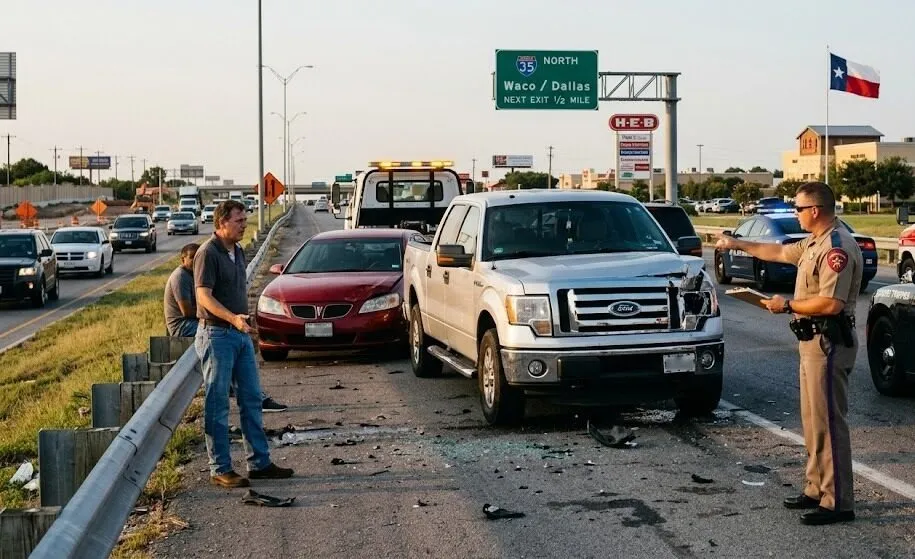
Introduction
After a car accident, one of the first questions people ask is: is Texas a no fault state for car accidents In Texas, the answer is no. Texas is not a no fault state for car accidents. Texas follows an at fault system, which means the driver who caused the collision is responsible for paying damages to the people they injured. If you were hurt by a careless driver on IH 2, US 281, or anywhere else in Texas, you have the right to file a claim directly against that driver and their insurance company.
At the Lopez Law Group, we represent drivers, passengers, and pedestrians across Texas who are dealing with insurance companies after serious crashes. This guide explains exactly how Texas car accident fault law works, what the 51% fault rule means for your case, and what steps to take to protect your claim from the start.
Quick Answer Box
Is Texas a no fault state for car accidents? No. Texas is an at fault state for car accidents. Under Texas car accident liability law, the driver who caused the crash bears financial responsibility for the other party’s injuries and property damage. Texas follows modified comparative fault rules under CPRC §33.001 if you are 50% or less at fault, you may recover damages reduced by your percentage of fault.
Table of Contents
- No Fault vs. At Fault: What the Difference Means for You
- How Texas Car Accident Fault Law Actually Works
- The Texas 51% Fault Rule Explained
- Who Pays in a Texas Car Accident?
- How Fault Is Determined After a Texas Car Crash
- What to Do After an At Fault Accident in Texas
- Texas Car Accident Insurance Requirements
- Common Mistakes That Hurt Your Claim
No Fault vs. At Fault: What the Difference Means for You
Definition No Fault vs. At Fault State In a no fault state, each driver files a claim with their own insurance company after a crash, regardless of who caused it. Personal Injury Protection (PIP) coverage pays medical bills up to policy limits, and the right to sue the other driver is restricted. In an at fault state like Texas, the driver who caused the accident is financially responsible for all damages. The injured party files a claim directly against the at fault driver’s liability insurance.
Texas has never been a no fault state. Every car accident in Texas involves a liability question: who caused the crash? The answer determines who pays for medical bills, lost wages, vehicle repairs, and other losses.
State comparison at a glance:
| Feature | No Fault States (e.g., Florida, Michigan) | Texas (At Fault) |
| Who pays your medical bills first? | Your own PIP insurance | At fault driver’s liability insurance |
| Can you sue the other driver? | Usually restricted | Yes, for any injury |
| Does fault matter for recovery? | Less so | Directly determines recovery |
| PIP coverage required? | Yes, mandatory | Optional in Texas |
| Governing law example | Michigan No Fault Act | Texas CPRC Chapter 33 |
Because Texas is an at fault state, the strength of your claim depends heavily on the evidence that shows the other driver caused the accident. That is why what you do in the hours and days after a crash in Hidalgo County, Cameron County, or anywhere else in Texas can make a significant difference.
How Texas Car Accident Fault Law Actually Works
Texas car accident liability rules follow a system called modified comparative fault, sometimes called proportionate responsibility. The legal foundation is the Texas Civil Practice and Remedies Code, Chapter 33.
Here is how it works in practice:
When two or more parties are involved in a crash, a jury (or an insurance adjuster during settlement negotiations) assigns a percentage of fault to each party. Your final compensation is reduced by the percentage of fault assigned to you.
Example: You are injured in a crash on IH 69 near McAllen. Medical bills, lost wages, and property damage total $100,000. A jury finds the other driver 80% at fault and you 20% at fault (perhaps you were slightly over the speed limit). Your compensation is reduced by 20%, so you may recover up to $80,000.
This system modified comparative fault Texas style is designed to be fair to all parties. It acknowledges that accidents are rarely black and white.
The critical limit in Texas is the 51% threshold. If you are found more than 50% responsible for the accident, Texas law bars you from recovering any damages at all. This is the Texas 51% fault rule, and it makes it essential to gather strong evidence from the moment a crash occurs.
The Texas 51% Fault Rule Explained
The Texas 51% fault rule formally called the modified comparative negligence 51% bar under CPRC §33.001 is one of the most important concepts in Texas car accident law. It works like this:
- 50% or less fault: You may recover damages, reduced proportionally by your fault percentage.
- 51% or more fault: You recover nothing. Texas law bars your claim entirely.
This rule gives insurance companies a strong incentive to argue that you share a large portion of blame for the crash. An insurance adjuster handling a Texas at fault accident may look for evidence that you were speeding, distracted, or failed to yield anything to push your fault percentage above 50%.
How fault percentages affect payout:
| Your Fault % | $80,000 Claim Value | What You May Recover |
| 0% | $80,000 | $80,000 |
| 20% | $80,000 | $64,000 |
| 40% | $80,000 | $48,000 |
| 50% | $80,000 | $40,000 |
| 51% | $80,000 | $0 |
The gap between 50% and 51% is the difference between recovering $40,000 and recovering nothing. When that much is at stake, having a Texas car accident attorney review the evidence before you speak to an insurance adjuster is not optional.
Who Pays in a Texas Car Accident?
Because Texas is an at fault state for car accidents, the at fault driver’s liability insurance is the primary source of compensation for the injured party. Texas law requires all drivers to carry minimum liability coverage of:
- $30,000 per injured person
- $60,000 per accident (total for all injured)
- $25,000 for property damage
According to theTexas Department of Insurance, these are minimums and in serious crashes, they are often not enough to cover all losses.
Other sources of compensation in a Texas car accident:
- Uninsured/Underinsured Motorist (UM/UIM) coverage Your own policy pays if the at fault driver has no insurance or insufficient coverage. This is optional in Texas but highly recommended.
- Personal Injury Protection (PIP) Optional in Texas. Pays your medical bills regardless of fault, up to policy limits.
- Medical Payments (MedPay) Similar to PIP but narrower in scope.
- Third party liability claims If the at fault driver was working at the time (delivery driver, rideshare driver, trucker), their employer may also face liability.
When the at fault driver is uninsured a common scenario in parts of the Rio Grande Valley your uninsured motorist coverage becomes your primary path to compensation. At the Lopez Law Group, our team has handled many cases involving uninsured drivers on US 83 and surrounding corridors where this issue comes up repeatedly.
How Fault Is Determined After a Texas Car Crash
Fault in a Texas car accident is determined by examining all available evidence. Insurance companies conduct their own investigations. Their goal is to minimize what they pay. Your goal is to present the clearest possible picture of what actually happened.
Evidence used to determine Texas car accident liability includes:
- Police report Officers document observations, statements, and any citations issued at the scene. A citation issued to the other driver carries significant weight.
- Traffic camera and dashcam footage Video from intersections or nearby businesses can confirm who ran a light or failed to yield.
- Witness statements Bystanders who saw the crash can corroborate your account.
- Physical evidence Skid marks, vehicle damage patterns, and debris location help reconstruct the collision.
- Cell phone records In distracted driving cases, records can show if the other driver was texting at the time of impact.
- Accident reconstruction experts In complex or disputed crashes, an expert analyzes the scene and produces a technical report.
The insurance adjuster for the at fault driver is not neutral. They are paid to protect the insurance company’s interests, not yours. That is why anything you say to them including a recorded statement can be used to increase your assigned fault percentage.
What to Do After an At Fault Accident in Texas
If you are involved in a car accident in Texas, take these steps to protect your right to recover compensation:
- Call 911 — Get police and emergency medical services to the scene. A police report creates an official record of the accident and documents any citations issued.
- Seek medical attention immediately — Even if you feel fine, see a doctor the same day. Delayed injuries like whiplash, concussions, and internal trauma often appear hours or days after a crash. A gap in medical care gives insurers grounds to argue your injuries were not caused by the accident.
- Document the scene — Take photos and video of vehicle damage, road conditions, skid marks, traffic signs, and any visible injuries. Do this before vehicles are moved if it is safe to do so.
- Get driver and witness information — Name, phone number, driver’s license number, license plate, and insurance carrier for all drivers involved. Collect names and phone numbers from any witnesses.
- Report the accident to your own insurance company — Texas law requires prompt reporting. Do not delay. But do not give a recorded statement to the other driver’s insurance company without legal advice.
- Preserve all evidence — Keep all medical records, repair estimates, receipts, and communications related to the accident in one place.
- Consult a Texas car accident attorney — Before you accept any settlement offer, speak with an attorney who handles Texas at fault accident cases. An early settlement from an insurance company rarely reflects the full value of your claim.
Texas Car Accident Insurance Requirements
Texas requires all drivers to carry minimum liability coverage, but the law also gives you options to protect yourself when the other driver does not carry enough insurance.
Required in Texas:
- Bodily injury liability: $30,000 per person / $60,000 per accident
- Property damage liability: $25,000
Optional but highly recommended:
- Uninsured/Underinsured Motorist coverage (UM/UIM)
- Personal Injury Protection (PIP) covers your medical bills regardless of fault
- Collision coverage pays for your vehicle damage regardless of fault
- Medical Payments (MedPay)
Texas law requires insurers to offer UM/UIM coverage, but drivers can reject it in writing. Many drivers in the Rio Grande Valley unknowingly waive this coverage and then face significant problems when they are hit by an uninsured driver.
The Texas Department of Insurance reports that approximately 20% of Texas drivers are uninsured. On some highway corridors in South Texas, that figure is higher. If you have UM/UIM coverage and are hit by an uninsured driver, your own policy becomes your compensation source and your own insurance company may still dispute the claim.
Texas Legal Notice
Legal Notice Texas Car Accident Fault Law
This post discusses Texas law as of 2025. Car accident liability rules in Texas are governed primarily by:
- Texas Civil Practice and Remedies Code, Chapter 33 (Proportionate Responsibility): Establishes modified comparative fault also called modified comparative negligence and the 51% bar rule.
- Texas Transportation Code §601.051: Requires all Texas drivers to carry minimum liability insurance.
- Statute of Limitations: Under CPRC §16.003, you have two years from the date of the accident to file a personal injury lawsuit in Texas. Missing this deadline bars your claim.
- 51% Rule: If you are found more than 50% at fault for a car accident, Texas law prohibits you from recovering any damages from the other party (CPRC §33.001).
- Government vehicles: Special notice requirements apply under the Texas Tort Claims Act (CPRC Chapter 101) if a government owned vehicle was involved.
This content is for informational purposes only and does not constitute legal advice. Every accident case is different. Consult a licensed Texas car accident attorney for guidance specific to your situation.
Data & Statistics
| Statistic | Year | Source | Why It Matters |
| 15,299 serious injury crashes occurred on Texas roads | 2023 | Texas Department of Transportation (TxDOT) | Shows the scale of at fault accidents that generate injury claims each year in Texas |
| Approximately 20% of Texas drivers are uninsured | 2023 | Texas Department of Insurance (TDI) | Underscores the value of carrying UM/UIM coverage in an at fault state |
| Distracted driving contributed to 97,853 crashes in Texas | 2023 | TxDOT | Distraction is a primary fault factor in Texas car accident liability disputes |
| The average cost of a non fatal crash injury in the U.S. exceeds $80,000 | 2022 | NHTSA | Illustrates why minimum Texas liability limits often fall short of covering real losses |
| Fatal crashes in Texas totaled 4,283 | 2023 | TxDOT | Highlights the severity of Texas roadway risk and the importance of full coverage |
Common Mistakes That Hurt Your Claim
Drivers who are injured in Texas car accidents often make errors that weaken their claim or reduce the compensation they may recover:
- Giving a recorded statement to the other driver’s insurance company. Adjusters use these statements to find inconsistencies and increase your assigned fault percentage. You are not required to give one.
- Delaying medical treatment. A gap between the accident date and your first doctor visit gives the insurance company grounds to argue your injuries were pre existing or unrelated to the crash.
- Posting about the accident on social media. Photos, comments, or check ins that show you are active and mobile can be used to dispute your injury claims.
- Accepting the first settlement offer. Early offers rarely account for future medical costs, lost earning capacity, or long term pain and suffering. Once you accept, you waive the right to seek more.
- Failing to document the accident scene. Without photos, witness contacts, and a police report, your account of what happened is harder to corroborate.
- Assuming the police report settles the fault question. A police report is important evidence, but it is not the final word on fault. Insurance companies and juries can reach different conclusions.
- Not reporting the accident to your own insurance company. Texas policies typically require prompt notification. Delayed reporting can give your insurer grounds to deny coverage.
- Missing the two year statute of limitations. Filing after the deadline under CPRC §16.003 permanently bars your right to sue no exceptions for most cases.
Attorney Lopez Perspective
“In our experience handling car accident cases across Texas from the Rio Grande Valley to Houston to Dallas we see the same pattern repeatedly. The at fault driver’s insurance company begins building its case within hours of the crash. They have adjusters, investigators, and lawyers working the file before our clients have even seen a doctor. Families who call us early give our team the ability to gather the same evidence the insurance company is gathering, and to make sure our clients are not pressured into accepting far less than their case is worth.”
Attorney Fernando J. Lopez, The Lopez Law Group
When to Call a Lawyer
If any of the following applies to your Texas car accident, speak with a car accident attorney before you take any further steps with the insurance company:
- The other driver’s insurance company has already contacted you and is requesting a recorded statement
- You suffered injuries that required emergency care, hospitalization, surgery, or ongoing treatment
- The police report contains inaccurate information about how the crash happened
- The other driver was uninsured or underinsured and you have UM/UIM coverage
- You missed work because of your injuries and have lost wages to recover
- The accident involved a commercial truck, rideshare vehicle, or company car (multiple parties may share liability)
- The insurance company offered a fast settlement that does not cover your full medical costs
- You were involved in a crash on IH 2, IH 69, US 83, US 281, or other heavily traveled Texas corridors where liability disputes are common
The Lopez Law Group handles car accident cases throughout Texas on a contingency fee basis. You pay nothing unless we recover for you.
Call (956) 968 7800 today for a free consultation with a Texas car accident attorney.
Frequently Asked Questions
Is Texas a no fault state for car accidents?
No. Texas is an at fault state for car accidents. The driver who caused the crash is legally responsible for paying damages to injured parties. Under Texas car accident liability law (CPRC Chapter 33), the injured party files a claim against the at fault driver’s liability insurance not their own. This applies to crashes anywhere in Texas.
What is the Texas 51% fault rule?
The Texas 51% fault rule, established under CPRC §33.001, means that if you are found more than 50% responsible for a car accident, you cannot recover any damages. If your fault is 50% or less, you may recover compensation reduced by your fault percentage. Insurance companies frequently argue comparative fault to reduce or eliminate payouts.
Who pays for car accident damages in Texas?
In Texas, the at fault driver’s liability insurance pays for the other party’s damages medical bills, lost wages, property damage, and pain and suffering. If the at fault driver is uninsured or underinsured, your own UM/UIM coverage may pay. PIP coverage on your own policy can also cover medical bills regardless of fault.
What is modified comparative fault in Texas?
Modified comparative fault Texas style means that multiple parties can share responsibility for a crash, and each party’s recovery is reduced by their percentage of fault. Under CPRC Chapter 33, a party who is 51% or more at fault recovers nothing. A party 50% or less at fault recovers damages proportionally reduced.
Does a police report determine fault in a Texas car accident?
A police report is important evidence but it does not legally determine fault. Insurance adjusters and courts weigh the police report along with witness statements, physical evidence, surveillance footage, and expert analysis. An officer’s opinion on fault in the report is one factor, not a final legal determination.
How long do I have to file a car accident lawsuit in Texas?
Two years from the date of the accident under CPRC §16.003. If you miss this deadline, Texas courts will bar your claim. Do not wait until the deadline approaches evidence disappears, witnesses become harder to locate, and your attorney needs time to build the case properly.
Can both drivers be at fault in a Texas car accident?
Yes. Texas car accident fault percentage rules allow fault to be shared between multiple parties. Each party’s compensation is reduced by their assigned percentage. As long as your fault percentage is 50% or less, you may still recover damages reduced proportionally.
What happens if the other driver has no insurance in Texas?
If the at fault driver is uninsured, your uninsured motorist (UM) coverage pays for your damages if you have it. Without UM coverage, you may need to sue the other driver personally which is often difficult to collect on. This is one of the strongest reasons to carry UM/UIM coverage in Texas, where approximately 20% of drivers are uninsured.
What is contributory negligence in Texas car accident cases?
Texas does not use pure contributory negligence. Instead, Texas follows modified comparative fault (also called modified comparative negligence or proportionate responsibility). Under this system, you can recover damages even if you were partially at fault as long as your fault does not exceed 50%. Pure contributory negligence (which bars all recovery if you are any percent at fault) is used in only a few states and does not apply in Texas.
Can I recover damages if I was partly at fault for a Texas car accident?
Yes, as long as your fault percentage is 50% or less. Texas car accident fault percentage rules allow partial recovery. For example, if you were 30% at fault and your damages are $100,000, you may recover $70,000. If you were 51% or more at fault, Texas law bars any recovery.
Do I have to accept the insurance company’s fault determination?
No. An insurance company’s internal fault determination is not binding. If you disagree, your attorney can negotiate, present additional evidence, or file a lawsuit and let a jury decide. Juries in Texas routinely reach different fault conclusions than insurance adjusters do.
What should I say to the insurance company after a Texas car accident?
You are required to report the accident to your own insurer promptly. Beyond that, limit what you share. Do not give a recorded statement to the other driver’s insurance company without first speaking to a Texas car accident attorney. Anything you say can be used to increase your assigned fault percentage and reduce your payout.
Conclusion & Call to Action
Texas is not a no fault state for car accidents and that distinction has real consequences for your claim. Every percentage point of fault assigned to you reduces what you may recover. If an insurance adjuster successfully argues that you were more than 50% responsible, you recover nothing at all. The at fault system in Texas puts pressure on injured drivers to prove their case, and insurance companies begin working against claims from the moment a crash is reported.
The Lopez Law Group has helped car accident victims across Texas recover compensation after crashes caused by negligent drivers. We work on a contingency fee basis, and there is no charge unless we win your case. on Facebook,Instagram, andX for the latest updates!
Learn more about our Car Accident Legal Services →
Call (956) 968 7800 today for a free consultation. No win, no fee.
Author Bio
Fernando J. Lopez is the founder of the Lopez Law Group, a personal injury law firm with offices in Weslaco, Houston, and Austin, Texas.He provides bilingual legal representation in English and Spanish and serves clients throughout Texas, Kansas, and New Mexico.

